Stephen
The first Christian martyr, often recognizable in art through stones placed in his hands or on his book.
- motif: witness under violence
- function: fidelity unto death
Hagiography does not construct random characters. It repeats recognizable forms of holiness: the martyr, the ascetic, the bishop, the visionary, the charitable saint, the wise teacher, or the protective intercessor.
Click on a type to see how different figures fit within the same pattern.
The first Christian martyr, often recognizable in art through stones placed in his hands or on his book.
Model of the desert saint: withdrawal, demonic trial, and radical self-discipline.
A soldier turned bishop whose divided cloak becomes a paradigm of mercy in action.
The learned virgin who unites wisdom and steadfastness, often marked by the wheel.
As apostolic pillars they often appear as a recognizable pair, marked by key and book or sword.
Poverty, affective devotion, and the reception of the stigmata make him a new form of saintly nearness.
Desert figure, forerunner, and martyr, often identified by rough clothing and the lamb.
Not a single life story, but a liturgical ordering of saintly nearness and intercession.
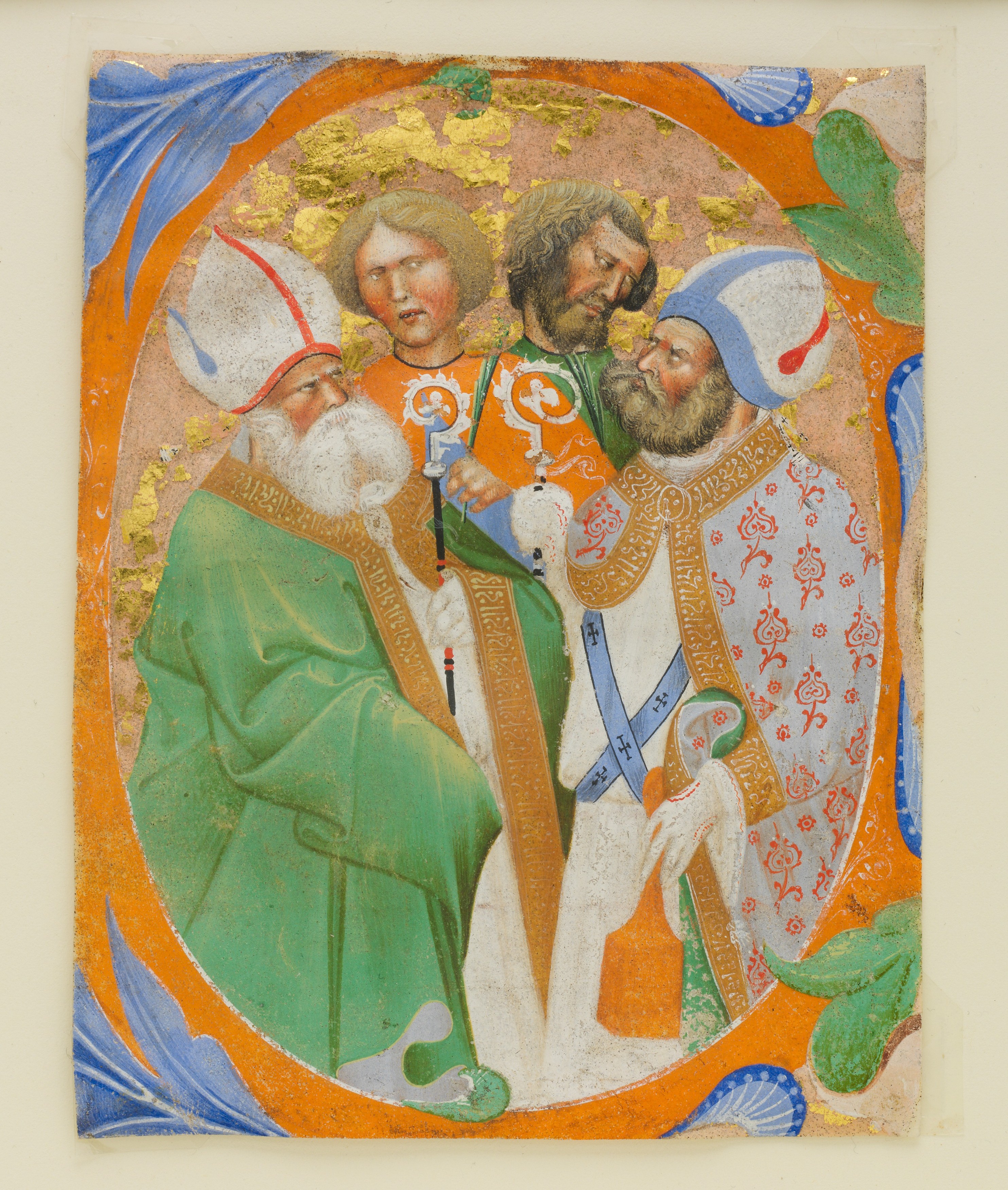
Medieval viewers did not need to read every label. Key, wheel, stones, cloak, or book functioned as visual quick-codes that immediately activated the saint's story.
Many saints combine several logics at once: a martyr can also be a teacher, a monk can also be a visionary, and a bishop can also be a wonder-worker. That complexity makes hagiography richer than a simple catalog.
Repetition is not a lack of creativity, but a way of making a saint immediately legible and liturgically usable.
It is precisely the small deviations that show how cities, monasteries, and regions added their own saintly profile to the genre.